Building Reliable 3D Slicer Workflows
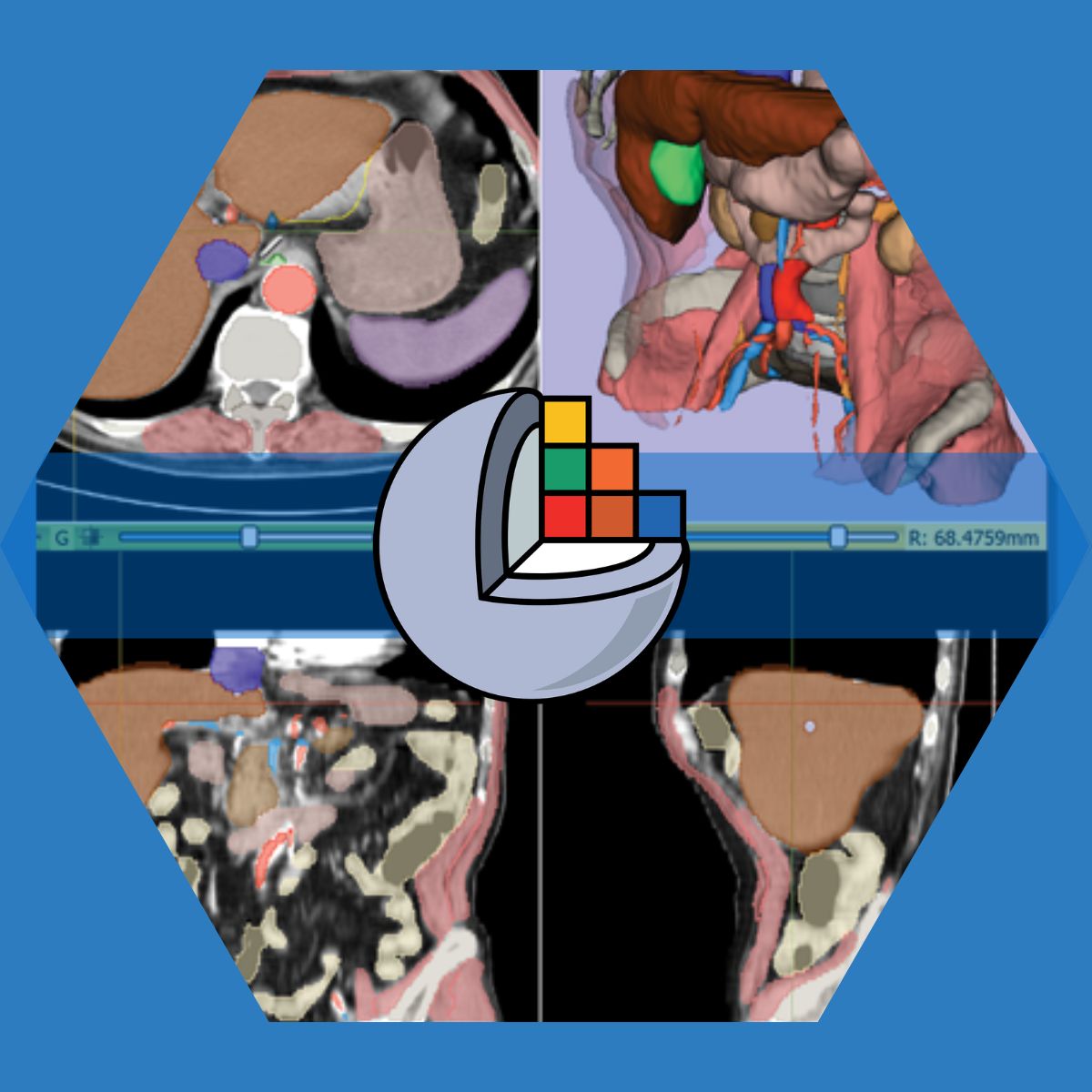
3D Slicer is widely recognized as a powerful open source platform for medical image visualization and analysis. With millions of downloads across its core platform and extensions, it has become a foundational tool for researchers, engineers, and clinicians working across imaging domains.
As 3D Slicer is adopted for more complex, long-running projects, maintaining reliability, reproducibility, and operational continuity becomes essential. Frequent releases and infrastructure evolution introduce change that technical teams must manage deliberately, particularly when workflows interface with clinical environments, shared pipelines, or custom applications.
Why Maintenance Is Essential
Long Running Slicer Workflows
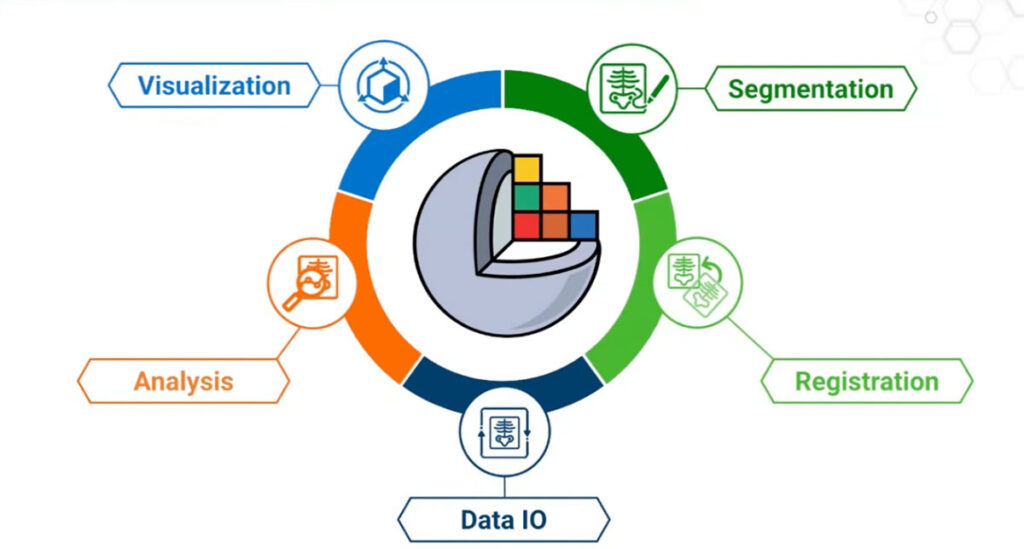
3D Slicer evolves continuously, adding new features, improving performance, and updating its underlying infrastructure. For example, the recent 5.10 release demonstrates how significant advances and new capabilities are introduced while laying the groundwork for future milestones such as Slicer 6.0.
Version 5.10 brings:
- A transition to Python 3.12, which aligns Slicer with modern scientific libraries and scripting environments, but also requires teams to revalidate Python-dependent workflows.
- Support for secure DICOM communication using TLS, which supports research workflows that interact with secured PACS and institutional infrastructure.
- Enhanced data I/O, such as 5D NRRD support for multi-component and time-series imaging workflows.
- Improved volume rendering and display tools that streamline interactive exploration of complex datasets.
These improvements extend Slicer’s capability but also create maintenance obligations: teams must evaluate behavior changes, test extensions and scripts, and assess deployment dependencies before integrating a new release into active workflows.
Custom Configurations
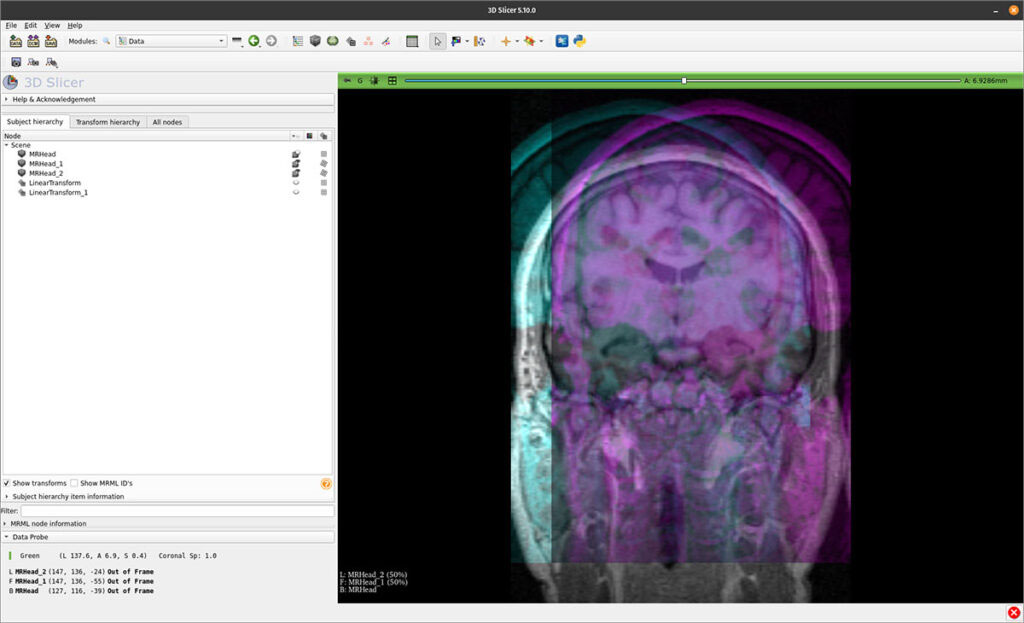
Researchers often use Slicer’s modular design to build tailored applications that expose only the tools relevant to their workflows. At RSNA 2025, Kitware showcased approaches to creating custom Slicer-based applications using tools such as the SlicerCustomAppTemplate, enabling streamlined interfaces and a more focused user experience.
From a maintenance perspective, custom applications introduce additional considerations. Custom builds must be tested against upstream Slicer releases to ensure internal API changes do not affect behavior, and updates to core components require coordinated versioning and regression testing to avoid disrupting tailored workflows.
Web-Accessibility
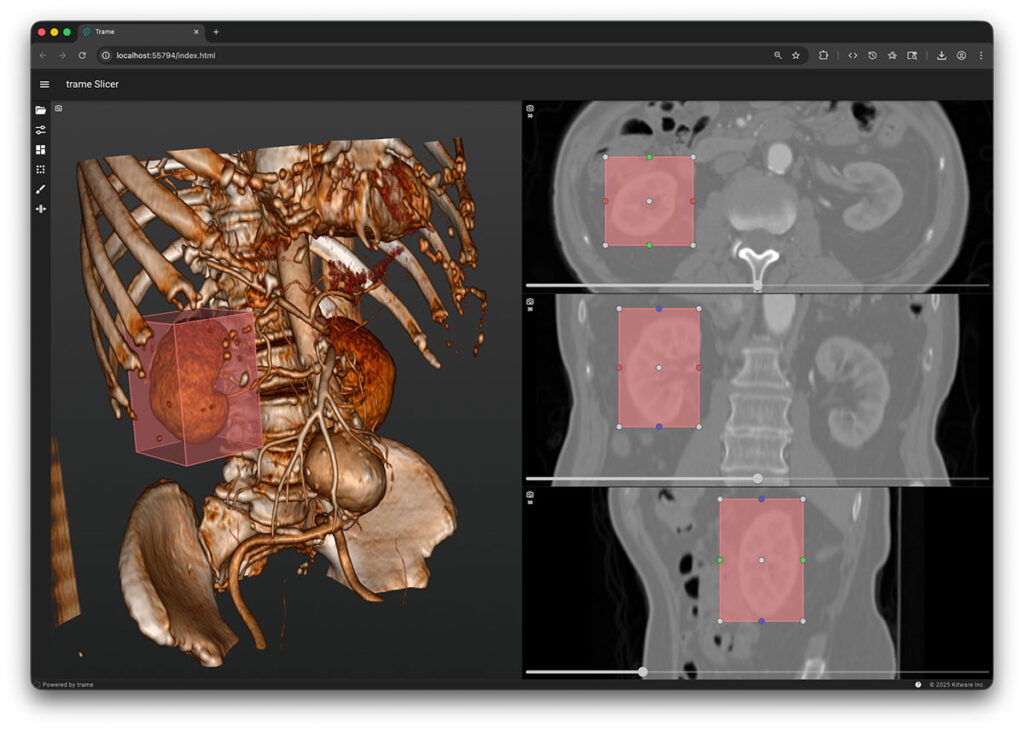
Expanding beyond desktop installations, researchers are also exploring web-native deployments of Slicer functionality. For example, the trame-slicer library bridges 3D Slicer components with the trame framework, enabling browser-accessible imaging workflows implemented in Python.
This approach supports scalable and collaborative workflows without requiring local installations, but it introduces additional maintenance considerations. Web and cloud environments have distinct dependency and packaging requirements, and alignment between trame-slicer builds and official Slicer releases requires ongoing coordination. Structured testing and environment documentation help ensure consistent behavior across both web-based and desktop deployments.
Reliability, Reproducibility, and Long-Term Sustainability
In shared, long-running environments, small inconsistencies can undermine reproducibility and slow collaboration. Without structured maintenance, teams often rely on reactive troubleshooting, making upgrades and issue resolution harder to manage.
Regular, intentional maintenance creates a more predictable operating model, supporting reliable issue reproduction, routine workflow validation, and clearer timelines for fixes. Over time, this disciplined approach acts as engineering stewardship, managing change in a controlled way so teams can adopt new capabilities while maintaining stability in research and healthcare workflows.
Maintenance Best Practices for 3D Slicer Workflows
Teams using 3D Slicer will benefit from adopting a small set of consistent maintenance practices. While the specifics vary by organization and use case, the following best practices commonly help teams improve reliability and reduce operational friction over time:
Version management and upgrade planning
Defining when and how new Slicer releases are evaluated, tested, and adopted—especially for environments that rely on scripted pipelines or custom extensions.
Extension governance and documentation
Tracking which extensions are in use, how they are validated, and how updates are managed to avoid undocumented dependencies or unexpected breakages.
Environment consistency and dependency control
Maintaining consistent Python, library, and system configurations across users and machines to support reproducibility and easier issue diagnosis.
Testing and validation workflows
While end-to-end integration tests require more upfront effort to set up, they can save time in the long run and help catch issues as new features are developed and dependencies are upgraded.
Issue reporting and reproducibility practices
Capturing enough contextual information—versions, configurations, sample data—to enable faster issue replication and resolution when problems arise.
Additional 3D Slicer Support
For teams that rely on 3D Slicer in shared, long-running, or production-adjacent workflows, maintenance often becomes a balancing act. While many organizations successfully manage their own upgrades and validation processes, others find that sustaining reliability over time requires more dedicated expertise and predictable support.
As key contributors to and long-term stewards of 3D Slicer, Kitware works closely with teams to support stable operations as workflows evolve. Kitware’s off-the-shelf maintenance packages are designed to complement internal best practices, providing direct access to Slicer developers, structured support meetings, and clear response timelines when issues arise.
Whether you are exploring maintenance support for the first time or reassessing how your organization supports 3D Slicer today, a brief conversation can help clarify the level of support that makes sense for your environment.