Meet the Team
Amanda Fernandez, Ph.D.
Assistant Director of Scientific AI Research
Kitware New York
Clifton Park, NY
Ph.D. in Computer Science
University at Albany, State University of New York
M.S. in Computer Science
University at Albany, State University of New York
B.S. in Computer Science
Siena College
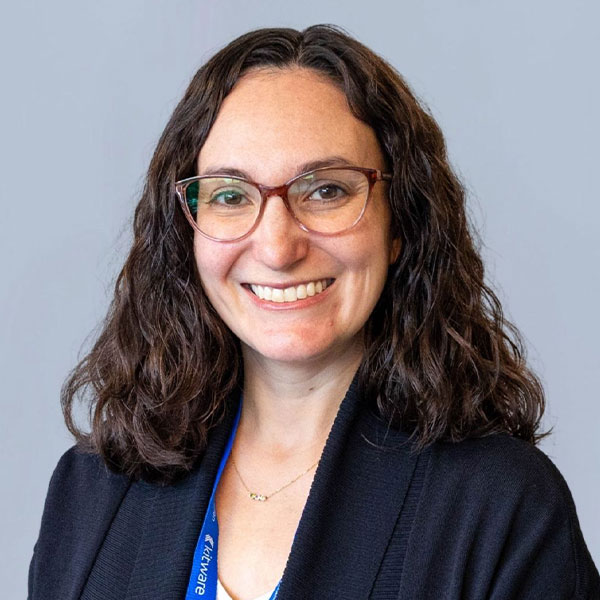
Amanda Fernandez, Ph.D., is an Assistant Director of Scientific AI Research on Kitware’s Scientific Computing Team located in Clifton Park NY. She conducts research in machine learning methods that perform reliably with limited and shifting data, including few-shot learning and out-of-distribution generalization, and applies these methods to experimental data in science and engineering. In her role, Amanda leads collaborative projects and proposals that bring advanced AI to complex data in specialized domains. She works with government, academic, and industry partners to identify opportunities where AI can accelerate scientific discovery.
Prior to joining Kitware, Amanda was a tenured associate professor in the Department of Computer Science at the University of Texas at San Antonio (UTSA) until 2026. There she served as the machine learning and deployment thrust lead for the MATRIX AI Consortium, and her research applied AI to domains including nuclear materials characterization, medical imaging, and planetary science. She collaborated with researchers across universities, national laboratories, and government agencies, secured more than $13 million in research funding, and mentored more than 200 graduate and undergraduate researchers.
Before her academic career, Amanda worked at United Services Automobile Association (USAA) as a senior research engineer, where she researched and developed machine learning solutions to challenges in materials applications, resulting in over 22 U.S. patents. Prior to this, she built her software engineering foundation at Auto/Mate Dealership Systems, Captira Analytical, and the New York State Department of Taxation and Finance.
Amanda’s graduate work, conducted in the Machine Learning & Vision Lab at the University at Albany, focused on visual salience estimation and content-based image retrieval. She earned her Ph.D. and master’s degree in computer science from the University at Albany, State University of New York. She received her bachelor’s degree in computer science from Siena College.
Awards
Kay and Steve Robbins Faculty Teaching Fellowship in Computer Science, UT San Antonio – 2025-2026
Council on Undergraduate Research (CUR) Mathematical, Computing, and Statistical Sciences (MCS) Mid-Career Faculty Mentor Award – 2026
Richard S. Howe Excellence in Service to Undergraduate Students Award, UT San Antonio – 2026
Outstanding Acheivement Award – Research Excellence, UT San Antonio – 2019
Distinguished Dissertation Award – University at Albany – 2015
Invited Talks & Media
“Getting Started with Research in Computing” with the Cambridge University Press
Professional Associations & Service
CVF Member 2011 – present
Senior Member of the Association for Computing Machinery (ACM) – 2026 to present
Senior Member of the Institute of Electrical and Electronics Engineers (IEEE) – 2023 to present
Senior Member of the National Academy of Inventors (NAI) – 2022 to present
Reviewer for NeurIPS, AAAI, CVPR, WACV, ICPR, TPAMI, JEI
Publications
- N. Menon, E. Smith, N. Bastian, A. Hoogs, A. Basharat, and B. Hu, "Metacognition AI framework for effective fusion and reasoning over media forensics analytics," in Assurance and Security for AI-enabled Systems 2026, 2026. [URL]
- J. Perry, P. Rajarajan, and A. Fernandez, "An empirical study of sample utility with stable preferential pruning," in Machine Learning from Challenging Data 2026, 2026. [URL]
- L. Robinson and A. Fernandez, "Beyond energy density: multimodal learning for porosity prediction in LPBF," in Machine Learning from Challenging Data 2026, 2026. [URL]
- M. Nootbaar and A. Fernandez, "Mars spectrometry analysis through transformer-based deep learning," in Machine Learning from Challenging Data 2026, 2026. [URL]
- B. Bell, M. Geyer, D. Glickenstein, K. Hamm, C. Scheidegger, A. Fernandez, and J. Moore, "Persistent Classification: Understanding Adversarial Attacks by Studying Decision Boundary Dynamics," Statistical Analysis and Data Mining: An ASA Data Science Journal, vol. 18, no. 1, pp. e11716, Feb. 2025. [URL]
- E. Payne, D. Patrick, and A. Fernandez, "Explaining Model Parameters Using the Product Space," in Pattern Recognition. Springer Nature Switzerland, 2025, pp. 1-15. [URL]
- E. Payne, D. Patrick, and A. Fernandez, "Visualizing and Generalizing Integrated Attributions," in Pattern Recognition. Springer Nature Switzerland, 2025, pp. 455-470. [URL]
- B. Wilson, A. Rios, A. Fernandez, M. Rushforth, S. Ang, J. Quarles, and M. Flores, "A Dataset for the Prediction of Spanish Language Fluency by Quantification of Linguistic Components with Artificial Intelligence," in Proceedings of the 2024 8th International Conference on Natural Language Processing and Information Retrieval, 2024. [URL]
- S. Ang, A. Fernandez, M. Rushforth, and J. Quarles, "You Make Me Sick! The Effect of Stairs on Presence, Cybersickness, and Perception of Embodied Conversational Agents," in 2023 IEEE Conference Virtual Reality and 3D User Interfaces (VR), 2023. [URL]
- B. Bell, M. Geyer, D. Glickenstein, A. Fernandez, and J. Moore, "An Exact Kernel Equivalence for Finite Classification Models," 2023. [URL]
- C. Snyder, K. Montoya, D. Patrick, J. Stone, D. Mohanadhas, E. Sooby, and A. Fernandez, "Semantic Segmentation of Micrographs for Nuclear Fuel Analysis and Degradation Quantification," IEEE Access, vol. 11, pp. 118512-118520, 2023. [URL]
- E. Adib, A. Fernandez, F. Afghah, and J. Prevost, "Synthetic ECG Signal Generation Using Probabilistic Diffusion Models," IEEE Access, vol. 11, pp. 75818-75828, 2023. [URL]
- E. Payne and A. Fernandez, "Defining Point Cloud Boundaries Using Pseudopotential Scalar Field Implicit Surfaces," in 2022 IEEE International Conference on Image Processing (ICIP), 2022. [URL]
- D. Patrick, M. Geyer, R. Tran, and A. Fernandez, "Reconstructive Training for Real-World Robustness in Image Classification," in 2022 IEEE/CVF Winter Conference on Applications of Computer Vision Workshops (WACVW), 2022. [URL]
- W. Haider, N. Moustafa, M. Keshk, A. Fernandez, K. Choo, and A. Wahab, "FGMC-HADS: Fuzzy Gaussian mixture-based correntropy models for detecting zero-day attacks from linux systems," Computers & Security, vol. 96, pp. 101906, Sep. 2020. [URL]
- H. Moradi, W. Wang, A. Fernandez, and D. Zhu, "uPredict: A User-Level Profiler-Based Predictive Framework in Multi-Tenant Clouds," in 2020 IEEE International Conference on Cloud Engineering (IC2E), 2020. [URL]
- J. Perry and A. Fernandez, "EyeSeg: Fast and Efficient Few-Shot Semantic Segmentation," in Computer Vision – ECCV 2020 Workshops. Springer International Publishing, 2020, pp. 570-582. [URL]
- S. Haider, A. Akhunzada, I. Mustafa, T. Patel, A. Fernandez, K. Choo, and J. Iqbal, "A Deep CNN Ensemble Framework for Efficient DDoS Attack Detection in Software Defined Networks," IEEE Access, vol. 8, pp. 53972-53983, 2020. [URL]
- J. Perry and A. Fernandez, "MinENet: A Dilated CNN for Semantic Segmentation of Eye Features," in 2019 IEEE/CVF International Conference on Computer Vision Workshop (ICCVW), 2019. [URL]
- A. Fernandez, "On the Salience of Adversarial Examples," in Advances in Visual Computing. Springer International Publishing, 2019, pp. 221-232. [URL]
- E. Schroeder, N. Walker, and A. Danko, "Wearable ear EEG for brain interfacing," in SPIE BiOS, 2017. [URL]
- A. Danko and S. Lyu, "Fused methods for visual saliency estimation," in IS&T/SPIE Electronic Imaging, 2015. [URL]