Kitware at HIMSS 2026: Driving Innovation in Healthcare Technology
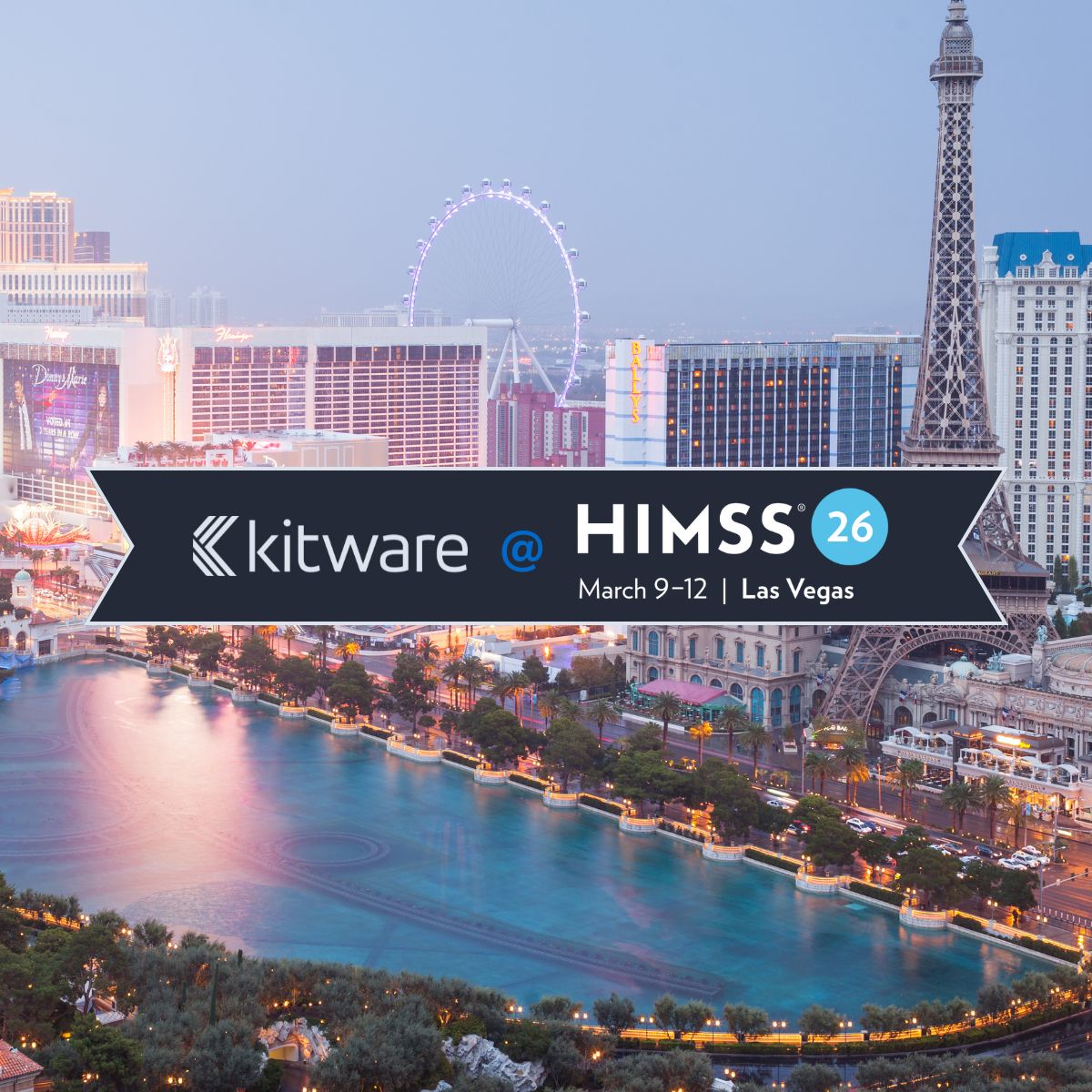
March 9-12, 2026, in Las Vegas, Nevada | Booth #6353
HIMSS is a leading global conference that brings together healthcare and technology professionals to improve patient care, streamline clinical workflows, and advance medical research. This year, Kitware is showcasing how to make complex workflows more efficient and accessible with open source platforms and AI-driven tools.
Visit us at Booth #6353 to see demonstrations of AI-powered medical imaging solutions built on open source foundations.
Schedule a 1:1 demo with our developers.
From Research Prototypes to Deployable Clinical Solutions Without Vendor Lock-In
Kitware brings deep medical imaging expertise, proven regulatory experience, and the ability to deliver production-grade software to our partners. We can help with:
- AI-powered medical imaging solutions built on open source, with flexible engagement models and rapid proof-of-concept development.
- Clinical translation & deployment support to integrate imaging and AI into real workflows (including validated preprocessing pipelines and ecosystem integrations like MONAI and NVIDIA Clara).
- Research-to-product partnerships with health systems and academic medical centers that are aligned with reproducibility, transparency, and long-term sustainability.
- Training data platforms & annotation workflows using HistomicsTK for managing, visualizing, and analyzing digital pathology data.
Schedule time with Kitware to review your use case and technical requirements. We’ll walk through feasible architectures, integration options, and what a realistic delivery plan looks like so you leave with clear next steps. Book a meeting
Check out our FDA Success Story: XENOVIEW VDP
An FDA-cleared lung ventilation imaging software built on 3D Slicer for Polarean, Inc.
Explore Our Open Source Platforms
Kitware’s AI-powered medical imaging software is built on our trusted open source platforms, giving you a scalable path to clinical workflow integration, long-term maintainability, and ownership of your code.
3D Slicer – Medical Image Computing Platform
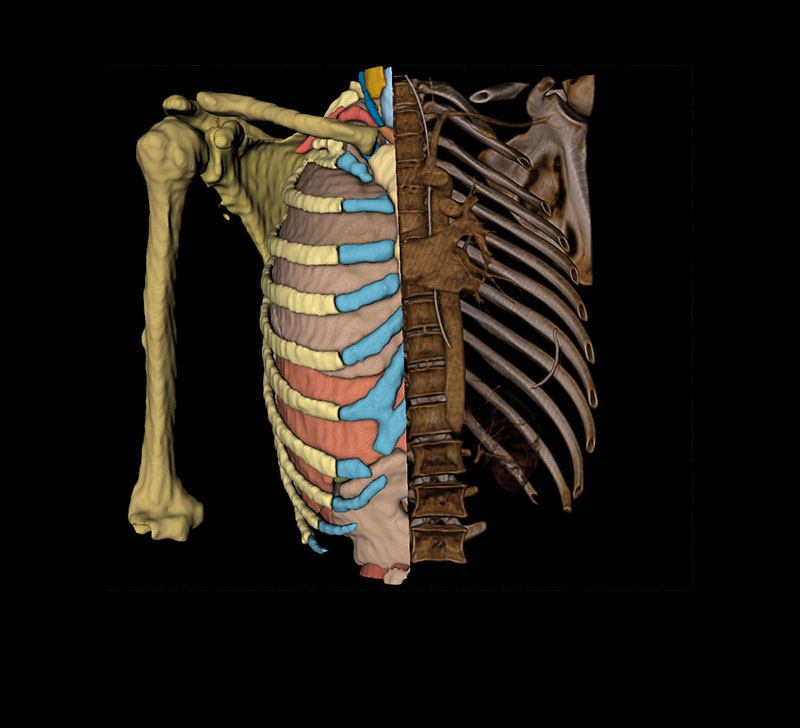
3D Slicer is the industry-leading open source medical imaging platform, with over 1 million downloads worldwide.
Key Capabilities:
- Full DICOM standard interoperability (2D, 3D, 4D images, segmentations, RT data).
- AI-powered segmentation with NVIDIA Clara and MONAI integration.
- Surgical planning, image-guided intervention, and radiation therapy workflows.
- VR/AR visualization via SlicerVR extension.
- Extensible architecture with 150+ community extensions.
Reliable operation of 3D Slicer is essential when workflows need to remain stable over long periods. As the platform evolves, updates to infrastructure and dependencies can affect existing behavior and validated pipelines. Maintenance support provides a clear path for addressing issues, evaluating changes, and introducing new releases without disrupting day-to-day use. Working directly with Kitware’s Slicer developers helps teams keep systems running, preserve reproducibility, and maintain continuity in clinical and regulated environments.
HistomicsTK & Digital Slide Archive (DSA) – Digital Pathology Suite
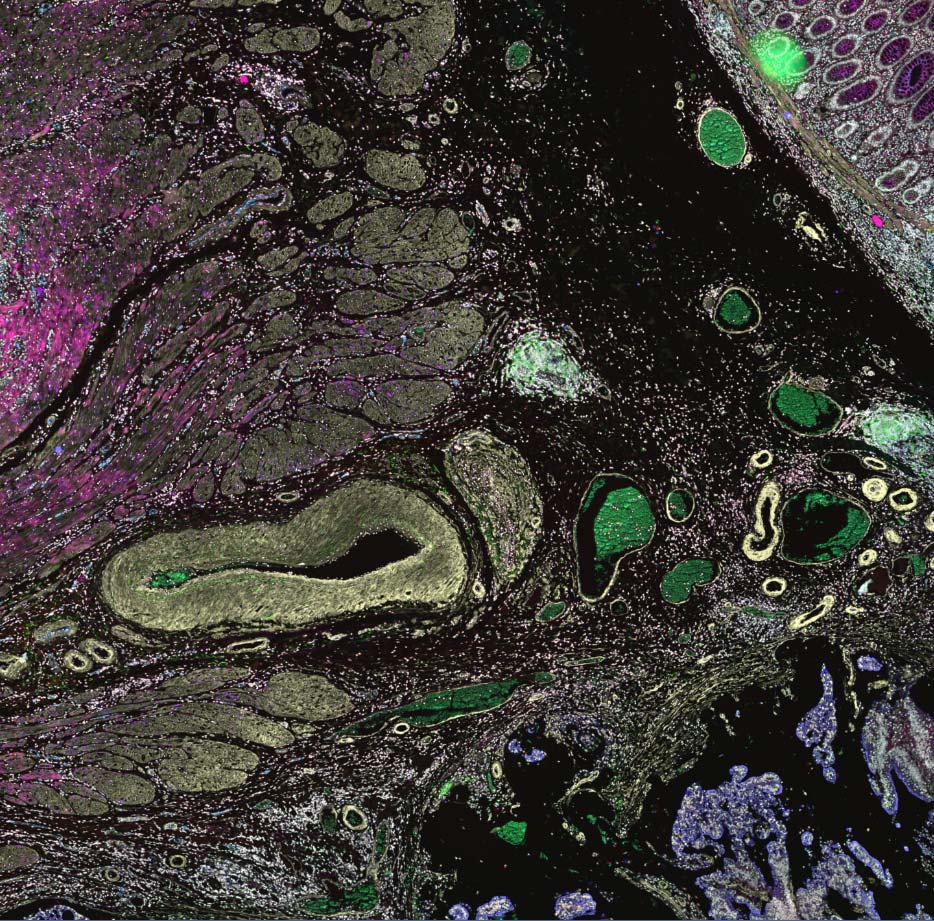
HistomicsTK and the Digital Slide Archive form an enterprise-grade digital pathology platform for scalable whole-slide imaging, AI-driven analysis, and clinical research workflows.
Key Capabilities:
- Web-based visualization of multi-gigapixel whole-slide images.
- Hardware-accelerated annotation supporting millions of annotations per slide.
- Built-in algorithms for nuclei segmentation, color normalization, and feature extraction.
- Robust APIs support seamless AI/ML model integration, enabling independent integration of user-provided models.
- Support for large-scale clinical and research datasets, including The Cancer Genome Atlas (TCGA).
- Designed for scalable deployment across hospitals and research institutions.
Embracing Change in Digital Pathology showcases how HistomicsTK continues to advance as a scalable, open source platform for managing and analyzing multi-gigapixel whole-slide images. Building on its proven foundation in projects such as The Cancer Genome Atlas (TCGA), enhancements to HistomicsTK’s large-image capabilities improve format support, performance, APIs, and data management. These strengthen HistomicsTK’s ability to support modern digital pathology workflows across research and clinical environments.
VolView – Browser-Based Radiological Viewer
VolView is a high-performance, zero-installation radiological viewer delivering advanced visualization and cinematic rendering directly in the browser.
Key Capabilities:
- Zero-installation, browser-based viewing with data remaining local for privacy and security.
- Full DICOMweb standard support for seamless PACS integration.
- Cinematic rendering for high-fidelity 3D visualization.
- Integration with Orthanc, AWS S3, Google Cloud, and NIH Imaging Data Commons.
- Cloud-ready architecture with options for embedded and white-labeled deployments.
- Designed for easy integration into existing health system infrastructure.
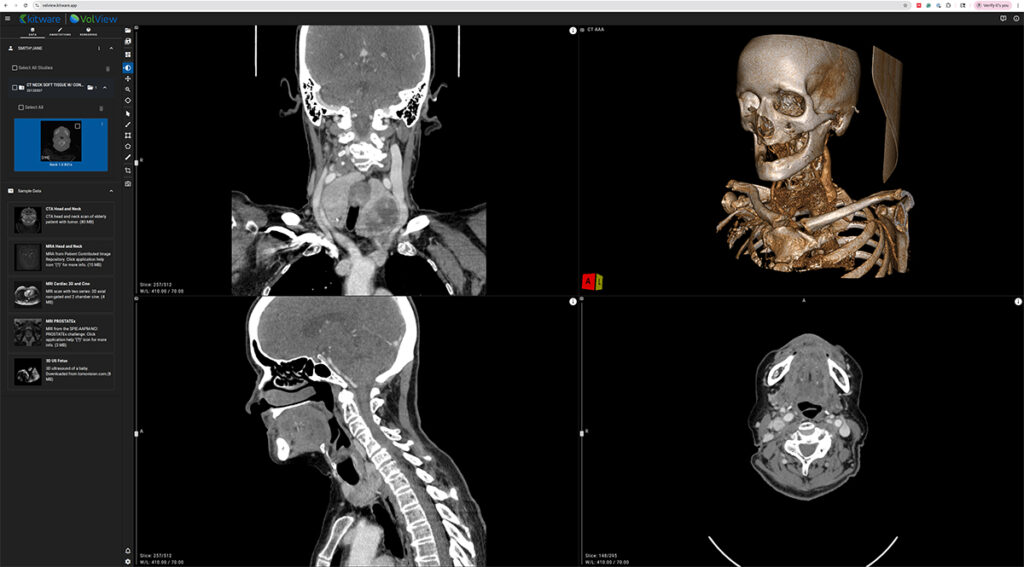
Integrating NVIDIA Clara Models into VolView demonstrates how VolView’s browser-native architecture enables advanced AI capabilities without client installation or remote rendering. The work integrates NVIDIA’s open source Clara models for segmentation, synthetic data generation, and multimodal reasoning using a decoupled, service-based design. This approach combines responsive, client-side visualization with scalable backend AI inference. Together, these capabilities show how modern web technologies can deliver workstation-class medical imaging and AI workflows directly in the browser.
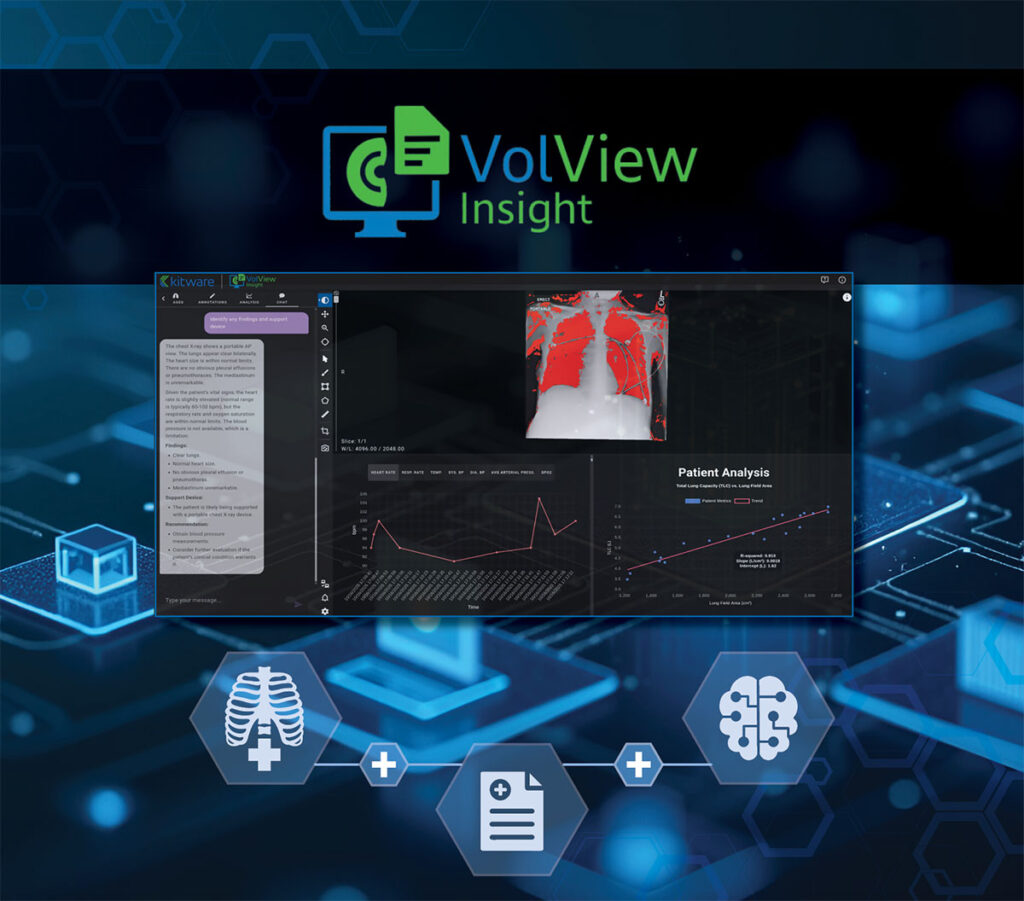
VolView Insight demonstrates how an open, standards-based platform can unify medical imaging, EHR data, and multimodal AI in a single web-based environment. The platform integrates PACS via DICOM/DICOMweb and EHR systems via HL7 FHIR and SMART on FHIR, enabling secure, interoperable access to imaging and structured clinical data. Built on open source technologies, this approach avoids proprietary lock-in while supporting realistic clinical and research workflows. Together, these capabilities show how imaging, EHR data, and AI inference can coexist in a unified workspace that bridges research innovation and clinical deployment.
Pulse Physiology Engine – Computational Physiology and Digital Twins
Pulse is an open source computational physiology engine enabling accurate, real-time, dynamic patient simulation for medical training, research, and digital twin applications.
Key Capabilities:
- Real-time, whole-body patient feedback generated through simulation of interconnected physiological systems (such as cardiovascular, respiratory, etc.) and their responses to disease, trauma, and clinical intervention.
- Pharmacokinetic/pharmacodynamic (PK/PD) drug modeling.
- Unity Asset Store and Unreal Engine plugins for immersive simulation experiences.
- Multi-platform support: Windows, macOS, Linux, Android, iOS, and WebGL.
- Creation of patient populations to simulate relevant patient variability and injury distributions.
- Proven in real-world deployments, including AFRL mechanical ventilation simulation and partners such as Lumeto and InvolveXR.
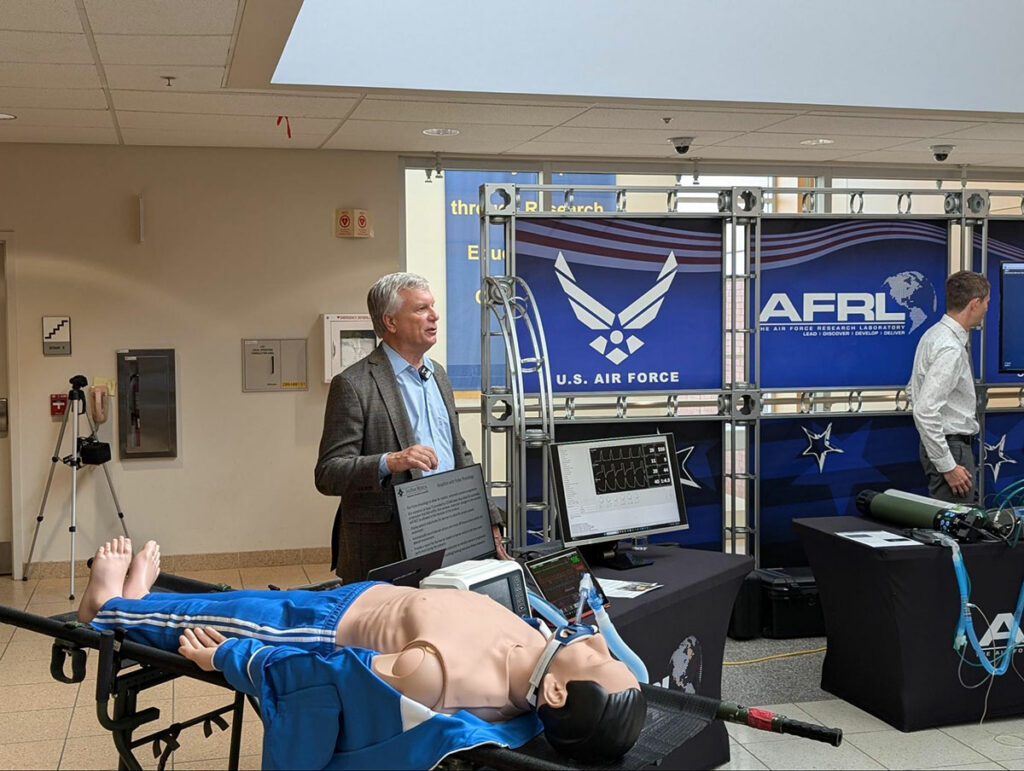
Project Spotlight: AFRL Mechanical Ventilation Simulation highlights Kitware’s collaboration with the Air Force Research Laboratory and partners to advance mechanical ventilation training through realistic simulation. The project integrates the Pulse Physiology Engine with hardware-in-the-loop systems to create an advanced ventilator simulator that models whole-body physiology in real time. By combining validated clinical scenarios, automated feedback, and physics-based modeling, the solution addresses training gaps, reduces skill decay, and improves clinician readiness in both military and civilian healthcare settings.
To see this technology in action, reserve time at our booth. Our developers can meet with you onsite to discuss your needs and how we can help.
Healthcare and Life Sciences at Kitware
Kitware’s interdisciplinary team of computer scientists, software engineers, and imaging experts has extensive expertise in medical imaging AI. Our technical areas of focus include:
- Bioinformatics and Precision Medicine
- Computational Modeling and Digital Twins
- Digital Pathology
- Edge Computing and Real-Time Healthcare Analytics
- Surgical Planning and Simulation
- Medical Image Analysis and Visualization
- Medical Triage
- Robotics
- Ultrasound and Point-of-Care Solutions
Kitware provides collaborative research, development, and technology integration services for government, academic research partners, and commercial customers in the medical and biomedical business sectors. Our team understands the critical need for robust, reliable, and high-performance software support in developing and deploying AI solutions in medical applications. We develop new methodologies, generate prototypes for proof-of-concept and feasibility studies, or participate in full product development for FDA approval.
Our solutions come with unlimited rights to the U.S. government, including no licensing fees or restrictions. For commercial customers, you own the proprietary source code we develop and the intellectual property. We can provide support at any stage of the medical product lifecycle, from initial R&D to IEC 62304 and HIPAA-compliant product development.
Kitware’s development, testing, and documentation practices are aligned with FDA requirements and HIPAA technical safeguards for software products. Kitware can sign NDAs and HIPAA BAAs, and we have the infrastructure to handle projects subject to CUI, EC, ITAR, and HIPAA regulations.
Kitware can help you harness the power of open source technology to develop cutting-edge medical software efficiently. Contact our team to learn more.