What It Takes to Support Cross-Platform Graphics Today: A Practitioner’s Perspective on WebGPU
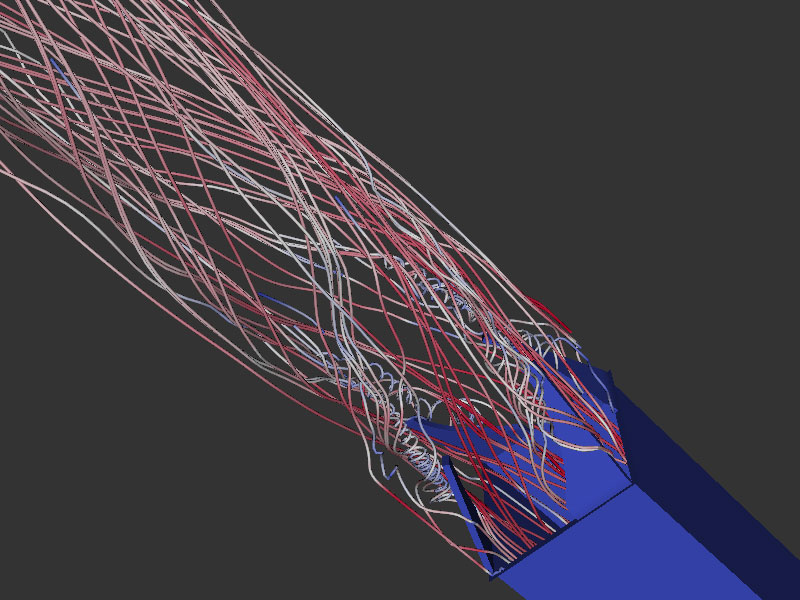
Graphics developers today are navigating an increasingly complex landscape. Supporting modern applications often means targeting desktop, mobile, and web platforms simultaneously, each with its own graphics APIs, capabilities, and constraints. These trade-offs are particularly acute in scientific and medical visualization, where teams must support everything from interactive in-situ analysis on HPC clusters to lightweight exploration in a web browser.
This raises a fundamental question:
Is it better to optimize for the full capabilities of each platform,
or to adopt a unified approach that works everywhere?
Supporting modern graphics across platforms introduces real trade-offs. Teams must decide whether to optimize for platform-specific capabilities or adopt a consistent approach that can scale across environments.
Recent discussions around WebGPU highlight this tension. Some developers point to capabilities in modern desktop APIs such as OpenGL 4.4 or 4.6 that are not currently exposed in WebGPU. Others highlight missing features such as advanced buffer management, descriptor indexing, or hardware-specific optimizations. There are also concerns that targeting multiple backends through a common abstraction can lead to a lowest common subset, limiting access to specialized techniques or reducing peak performance.
These concerns reflect the practical decisions required to build and maintain graphics systems at scale.
The Reality of Modern Graphics APIs
Low-level APIs like Vulkan, Metal, and Direct3D provide developers with fine-grained control over GPU resources. For teams building highly specialized rendering systems, this control is essential. Features such as advanced memory access patterns, hardware ray tracing, and platform-specific optimizations can significantly improve performance.
However, this level of control comes with real costs:
- Increased development complexity
- More verbose and error-prone code
- Platform-specific implementations
- Ongoing maintenance across multiple backends
In practice, supporting multiple APIs often means duplicating effort or building abstraction layers that must continuously evolve alongside underlying platforms.
This is where the trade-off becomes most visible. When targeting multiple APIs, teams are often forced to either maintain separate code paths for advanced features or accept a more portable subset of functionality.
Where WebGPU Fits
WebGPU is often discussed as a unifying API, particularly for web-based applications. It brings a modern, low-level programming model to the browser and aligns closely with concepts found in Vulkan, Metal, and Direct3D.
From a technical perspective, WebGPU does not eliminate the underlying complexity of graphics systems. Instead, it defines a portable subset of capabilities that can be implemented across platforms.
This means:
- Performance can be competitive within that subset
- Some advanced or platform-specific features may not be exposed
- Developers may still need to make trade-offs depending on their use case
It is important to be clear about this. WebGPU is not intended to replace every capability available in native APIs. In cases where specific features such as advanced streaming patterns or hardware-specific optimizations are required, native APIs may still be the right choice.
At the same time, WebGPU provides a consistent foundation that reduces the need to manage multiple independent backends for many cross-platform use cases.
Balancing Capability and Sustainability
From a purely technical standpoint, it is always possible to build highly optimized, platform-specific rendering systems. For some applications, this is the right approach.
However, for many teams, the primary challenge is not achieving peak performance on a single platform. It is maintaining a system that works reliably across many platforms over time.
This is where the conversation shifts.
Supporting the full spectrum of platforms often requires:
- Vulkan, Metal, and Direct3D backends
- Multiple versions of OpenGL
- Web-specific technologies
Maintaining these backends is not just a technical challenge. It is a long-term investment in engineering time, testing, and ongoing updates.
At scale, this complexity becomes a limiting factor. Reducing that complexity is often more impactful than maximizing performance on any single platform.
A Practical Perspective from Visualization Workflows
Scientific visualization workflows often involve time-varying, multi-terabyte datasets, distributed processing and remote rendering on HPC clusters, and collaborative analysis over web frameworks as well as virtual reality environments.
Historically, this has meant supporting multiple rendering backends and optimization strategies simultaneously. While effective, this approach increases both development and maintenance overhead and increases code complexity over time.
From our perspective, moving toward WebGPU is not simply about adopting a new API. It is about working toward a single, portable rendering pathway that can operate across platforms without requiring multiple independent implementations.
This approach involves trade-offs:
- Some platform-specific features may not be immediately available
- Certain advanced techniques may require alternative approaches
- The API surface may be more constrained than native backends
These trade-offs are balanced by meaningful benefits:
- Reduced long-term maintenance complexity
- A consistent programming model across platforms
- Improved accessibility for web-based applications
- A more sustainable path for open source development
Addressing Common Concerns
Does WebGPU limit access to advanced features?
In some cases, yes. WebGPU focuses on portability, which can limit exposure to highly specialized hardware features. We view this as a deliberate design choice that enables consistency across platforms.
Does abstraction lead to lost performance?
Performance depends on the use case. Within its design scope, WebGPU can deliver competitive performance. Peak optimization may still favor native APIs.
Does this mean multiple code paths are still necessary?
In some cases, yes. However, reducing the number of backends, even if not eliminating them, can significantly lower long-term development overhead.
How would my VTK application transition to using WebGPU?
Because the VTK data model and object‑oriented design intentionally abstract away concrete rendering details, most VTK applications should be able to transition to a WebGPU‑based VTK backend with minimal changes to their existing code.
How could my custom OpenGL overrides to VTK implementations be ported to the new WebGPU system?
As VTK adopts modern backends such as WebGPU, these overrides will need to be re-expressed in terms of the newer rendering abstractions.
What This Means for Developers
There is no single correct approach to graphics development today.
Instead, teams are making decisions based on:
- Performance requirements
- Platform coverage
- Available engineering resources
- Long-term maintenance costs
We believe that for many applications, especially those targeting both web and desktop environments, WebGPU represents a practical step toward simplifying cross-platform development.
It does not replace native APIs. It provides a path to reduce fragmentation and improve consistency.
Looking Ahead
As WebGPU continues to evolve, it will likely expand in capability while maintaining its focus on portability and security.
We expect that:
- Some advanced features will become more widely available
- Tooling and frameworks will mature
- Integration across platforms will improve
At the same time, the fundamental trade-offs will remain. Graphics development will continue to require balancing performance, flexibility, and sustainability.
We believe the role of WebGPU is not to replace all other APIs, but to provide a unified foundation that makes cross-platform graphics more manageable.
For teams facing the growing complexity of supporting multiple platforms, that shift can be significant.
Contact Us
If you are exploring how to support cross-platform graphics or modernize your visualization workflows, our team can help. Contact us to discuss how WebGPU and VTK can be applied to your specific development environment and performance requirements.