- Webinar
- September 30, 2026
- 12-1pm ET
What’s New in the Pulse Physiology Engine 4.4.0
Explore the latest release updates and physiological modeling improvements in the Pulse Physiology Engine.



Interest in digital twins built from mechanistic modeling continues to grow. There is also increasing interest in using these models to support clinical decision making, build and test AI models for clinical decision support, and develop autonomous medicine algorithms and hardware-in-the-loop solutions.
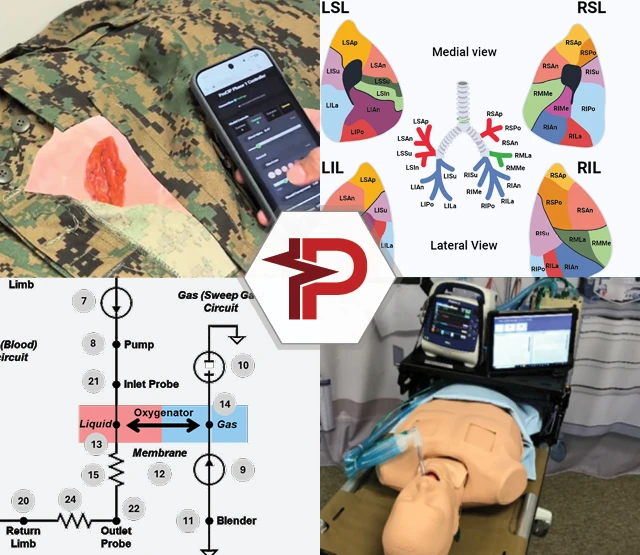
In this webinar, we’ll explore the latest features in the Pulse Physiology Engine, including:
- Improvements to hemorrhage modeling.
- Enhanced cardiopulmonary fidelity at the bronchopulmonary segment level.
- Addition of an ECMO model.
- Improvements to the naloxone PBPK model.
We’ll also demonstrate the new features and highlight projects that use Pulse, including DARPA ITM, DARPA GOLDEVAC, and Army PreSIP.
A live Q&A session will follow the presentation.
Key Takeaways
- See demonstrations of the latest capabilities.
- Learn how Pulse is being used in recent projects.
- Learn why mechanistic physiological models are receiving increased interest for digital twins, clinical decision support, autonomous medicine, and hardware-in-the-loop solutions.
Who Should Attend
This webinar is designed for researchers, developers, engineers, clinical and medical users, and managers or decision-makers interested in physiological modeling and simulation, including:
- Teams developing digital twins using mechanistic physiological models.
- Researchers using physiological models to support clinical decision making or build and test AI models for clinical decision support.
- Engineers developing autonomous medicine algorithms or hardware-in-the-loop solutions.
- Government, academic, and industry organizations exploring applications in multiphysics, autonomous medicine, and digital twins.