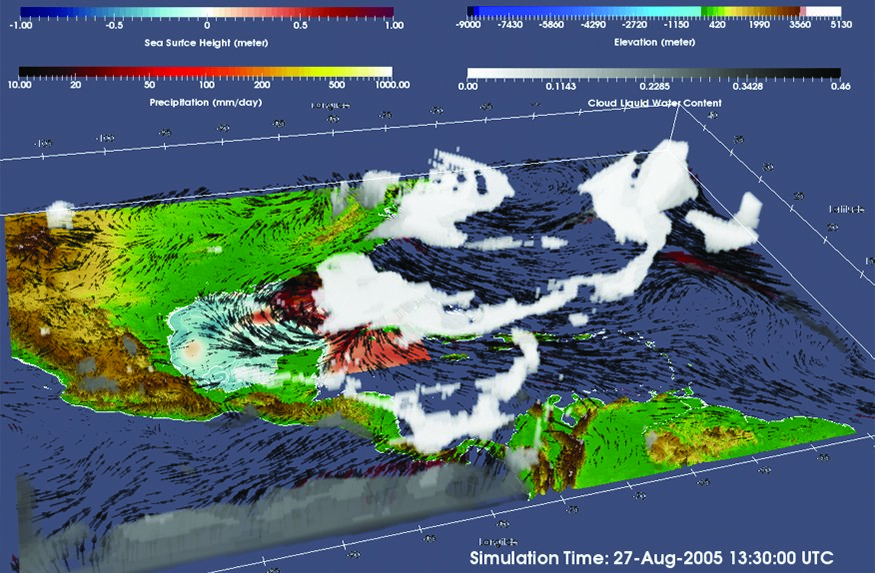
ParaView Catalyst 5.5 Changes
March 29, 2018
The big difference in ParaView Catalyst for ParaView 5.5 will be how Catalyst Python scripts are generated in the graphical user interface (GUI). With all of the functionality that’s gone into Catalyst, the script generator plugin in the GUI organically grew to the point that we needed to do a full rework to simplify the […]
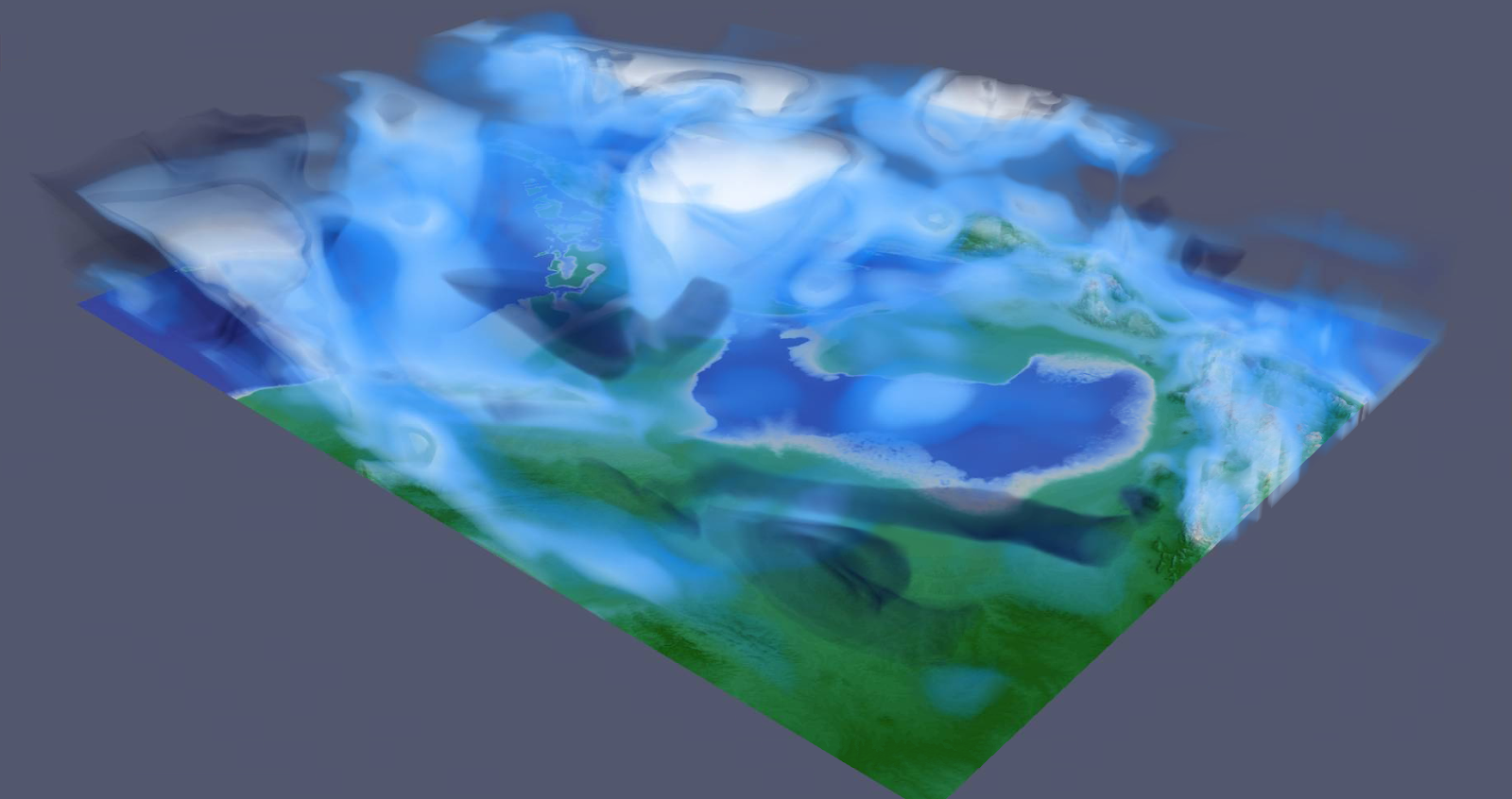
Index To the Series 1. Overview of Continuous Integration (CI) and Software Process in PyNWB 2. Packaging PyNWB for Multiple Operating Systems and Python Versions 3. Code Coverage, Documentation and Style In our previous post, we introduced the concept of continuous integration (CI) and described its benefits for software quality. In this post, we talk […]
CMake 3.11.0 available for download
March 28, 2018
I am proud to announce that CMake 3.11.0 is now available for download at: https://cmake.org/download/ Documentation is available at: https://cmake.org/cmake/help/v3.11 Release notes appear below and are also published at https://cmake.org/cmake/help/v3.11/release/3.11.html Some of the more significant changes in CMake 3.11 are: The Makefile Generators and the “Ninja” generator learned to add compiler launcher tools along with […]
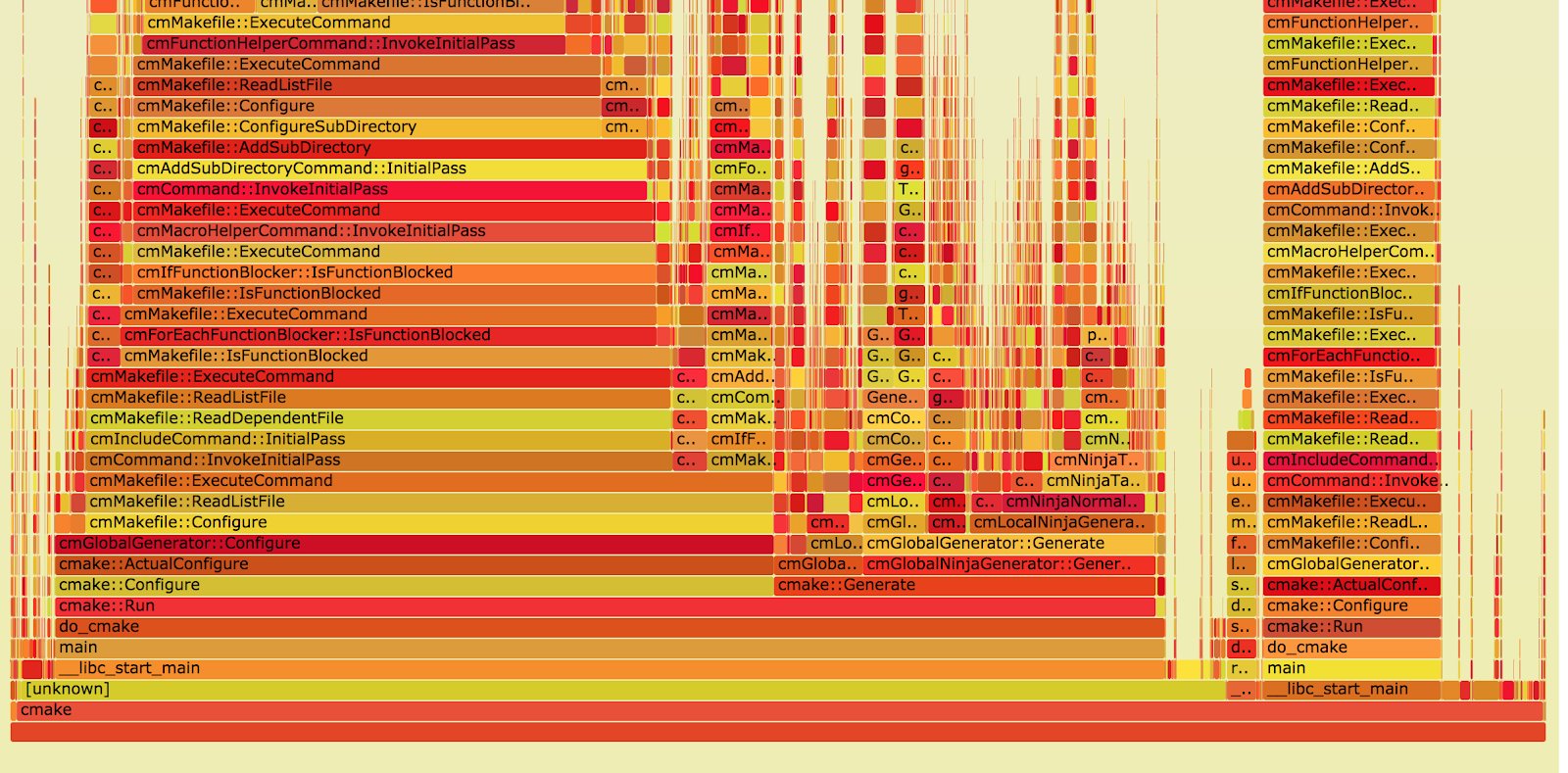
Improving CMake’s Runtime Performance
March 22, 2018
Last year, we made an effort to modernize code in the Visualization Toolkit (VTK). As part of this effort, we updated the CMake build system in VTK. We based the infrastructure on Modern CMake and CMake 3.3, in particular. This version of CMake is easily available from most Linux distributions; it adheres to usage requirements; and it provides C++11 […]
Index To the Series 1. Overview of Continuous Integration (CI) and Software Process in PyNWB 2. Packaging PyNWB for Multiple Operating Systems and Python Versions 3. Code Coverage, Documentation and Style Writing quality software requires you to have craftsmanship as well as technical expertise. While writing code is a demanding activity, you can automate portions […]
Open Chemistry in Google Summer of Code 2018
March 19, 2018
The Open Chemistry project has been accepted as a mentoring organization in the Google Summer of Code for a third year! We look forward to welcoming more students than ever as we have extended our umbrella to cover a number of outstanding open source chemistry projects out there. You can check out our GSoC intro […]
Using pvpython and virtualenv
January 24, 2018
If you have ever naively tried to build ParaView with Python wrapping enabled against a virtual environment you have created, and you have been disappointed with the results, then this post is for you. For example, maybe your custom application depends on ParaView Python wrapping as well as a specific version of Numpy. You may […]
Preview mode in ParaView
January 2, 2018
Saving out rendered results as images or animations is a common step in a typical ParaView visualization workflow. Often one sets up a scene and then uses the Save Screenshot or Save Animation menu options from the File menu to generate these results. In most cases, the generated images match what you are seeing on the screen. If you […]
Developing Casting Simulations in CMB
December 22, 2017
There is no question that numerical simulation tools have produced a wide range of benefits in the area of modeling and analysis, especially when coupled with high performance computational (HPC) systems. However, the complicated workflow involved in defining a numerical simulation requires a broad understanding of simulation codes and how to use them. Between defining […]
ITK 4.13.0 has been released
December 22, 2017
On behalf of the Insight Segmentation and Registration Toolkit (ITK) Community, we are happy to announce the release of ITK 4.13.0! Download ITK Here are a few selected highlights for this release: ITK is on PyPI: install ITK’s Python wrapping with: pip install itk IsotropicWavelets remote module: isotropic and steerable wavelets in the frequency domain […]
VTK 8.1.0
December 22, 2017
The VTK development team is pleased to introduce VTK 8.1.0. This release continues VTK’s evolution to multithreaded and GPU enabled fine grain parallel processing filters via VTK-m. VTK-m, introduced in VTK 8.0.0, is now bundled with VTK (technically we use a git submodule for it), we’ve made performance improvements to it, and added new algorithms […]
Using Open Source to Satisfy NIST SP 800-171 Requirements
December 20, 2017
As 2017 comes to a close, many government contractors are working toward the end-of-the-year deadline for compliance with the National Institute of Standards and Technology (NIST) Special Publication (SP) 800-171. NIST 800-171 is a document that specifies how information systems and policies need to be set up in order to protect Controlled Unclassified Information (CUI). […]
Tomviz 1.2 Released
November 5, 2017
We are pleased to announce the release of Tomviz 1.2.1 today, made two weeks after Tomviz 1.2.0 was released. The 1.2.1 release fixes a few minor bugs discovered at the Frontiers of Electron Tomography short course following the workshop at Berkeley Lab where we presented a Tomviz tutorial on Wednesday afternoon. This release was made […]
ITK Python: Image Pixel Types
November 1, 2017
Don’t worry about the pixel type In previous posts about the Insight Toolkit (ITK), we talked about installing ITK Python packages from PyPI, sharing data between ITK and NumPy, and even create your own ITK module with its Python wrapping automatically generated. This post will use examples from the NumPy post and explain in more […]
vtk.js: the Visualization Toolkit on the Web
October 31, 2017
A vtk.js rendering of a large-scale oceanic dataset with 5.2 million triangles. Rendering three-dimensional (3D) meshes and volumetric datasets became possible on the web years ago with the introduction of WebGL. Since that time, several libraries have gained popularity by supporting 3D data rendering in the web browser. These libraries often focus on gaming; they […]
Python Packages for ITK Modules
October 4, 2017
Recently, the Insight Toolkit (ITK) was made available in binary Python packages. While these packages make the core high-performance, multi-dimensional image analysis capabilities more accessible in Python, the brilliant researchers in the broader ITK community have additional advanced algorithms to contribute. They can now distribute extensions to the toolkit as Python packages from ITK Modules! […]
Recent Releases
September 21, 2017
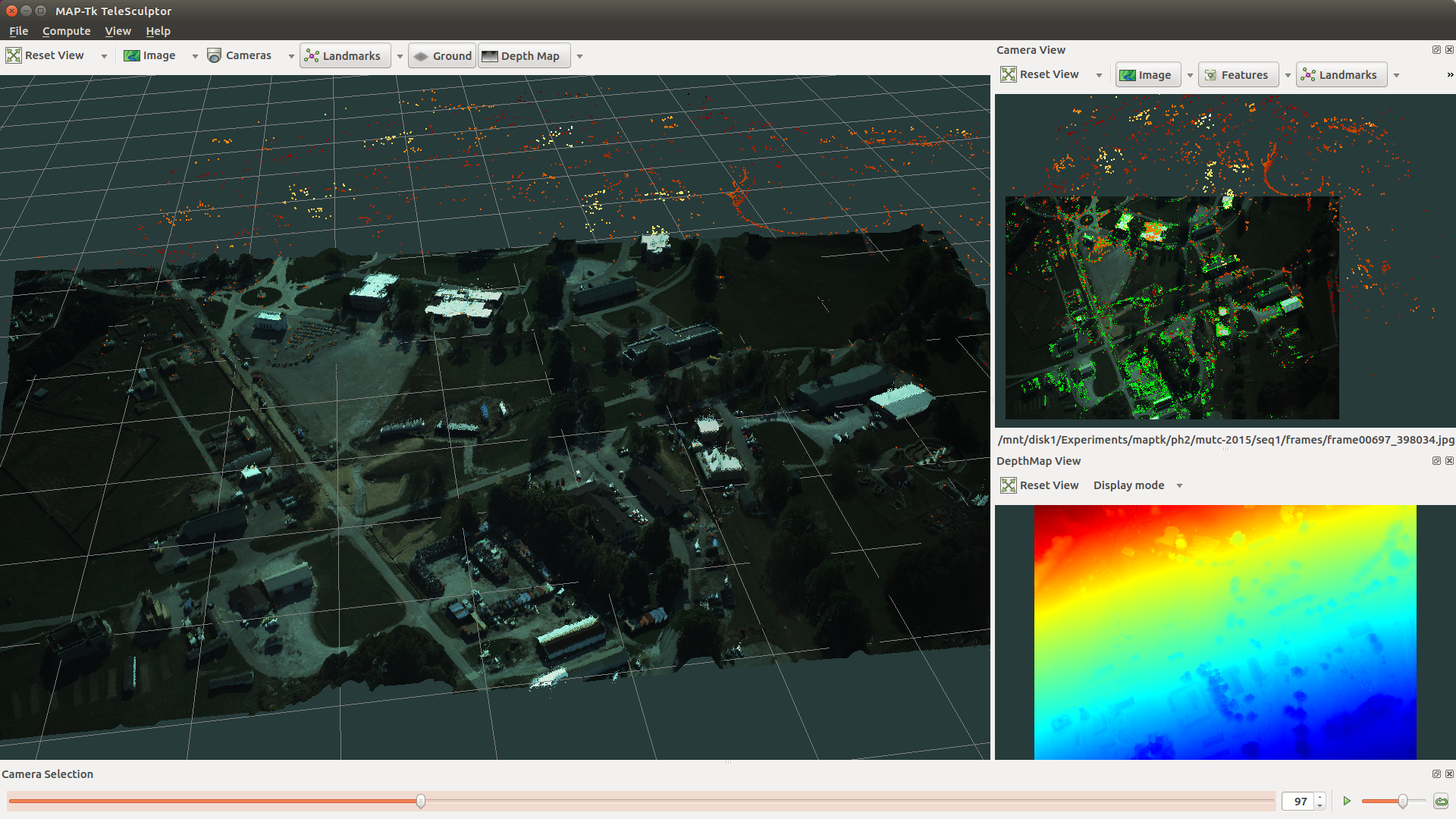
Kitware Maps Development of Toolkit for Image and Video Analysis Kitware released version 1.1 of the Kitware Image and Video Exploitation and Retrieval (KWIVER) open-source toolkit before the 2017 IEEE Conference on Computer Vision and Pattern Recognition (CVPR). Members of the computer vision team at Kitware appeared at the CVPR industry exposition to accent this […]
Integration of ParaView Catalyst with Regional Earth System Model
September 21, 2017
Fully coupled multi-component and multi-scale modeling systems such as Regional Earth System Model (RegESM) are used to represent and analyze complex interactions among physical processes. A typical application of RegESM can produce tens of terabytes of raw data. This data determines the resolution of the spatial grid, the length of the simulation and the number […]